Project background
Spray GenX returned to the Twinsburg Historical Society properties after completing major restoration work several years earlier using PeelRx and PrimeRx systems. The Freeman Barn project continues that preservation relationship with a building whose weathered wood, historic painted advertising and accumulated repairs require a measured approach rather than a conventional repaint.
Freeman Barn field documentation
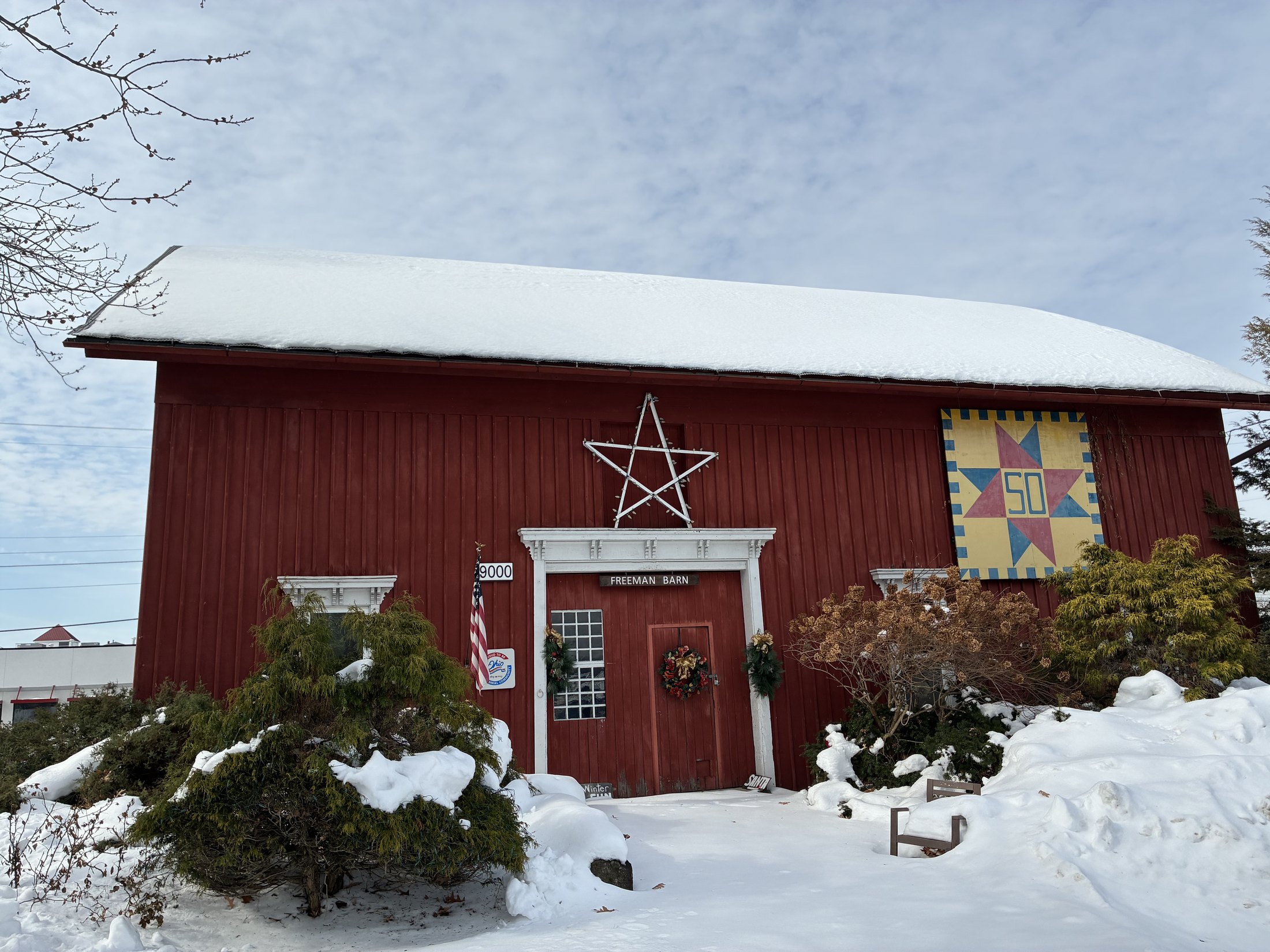
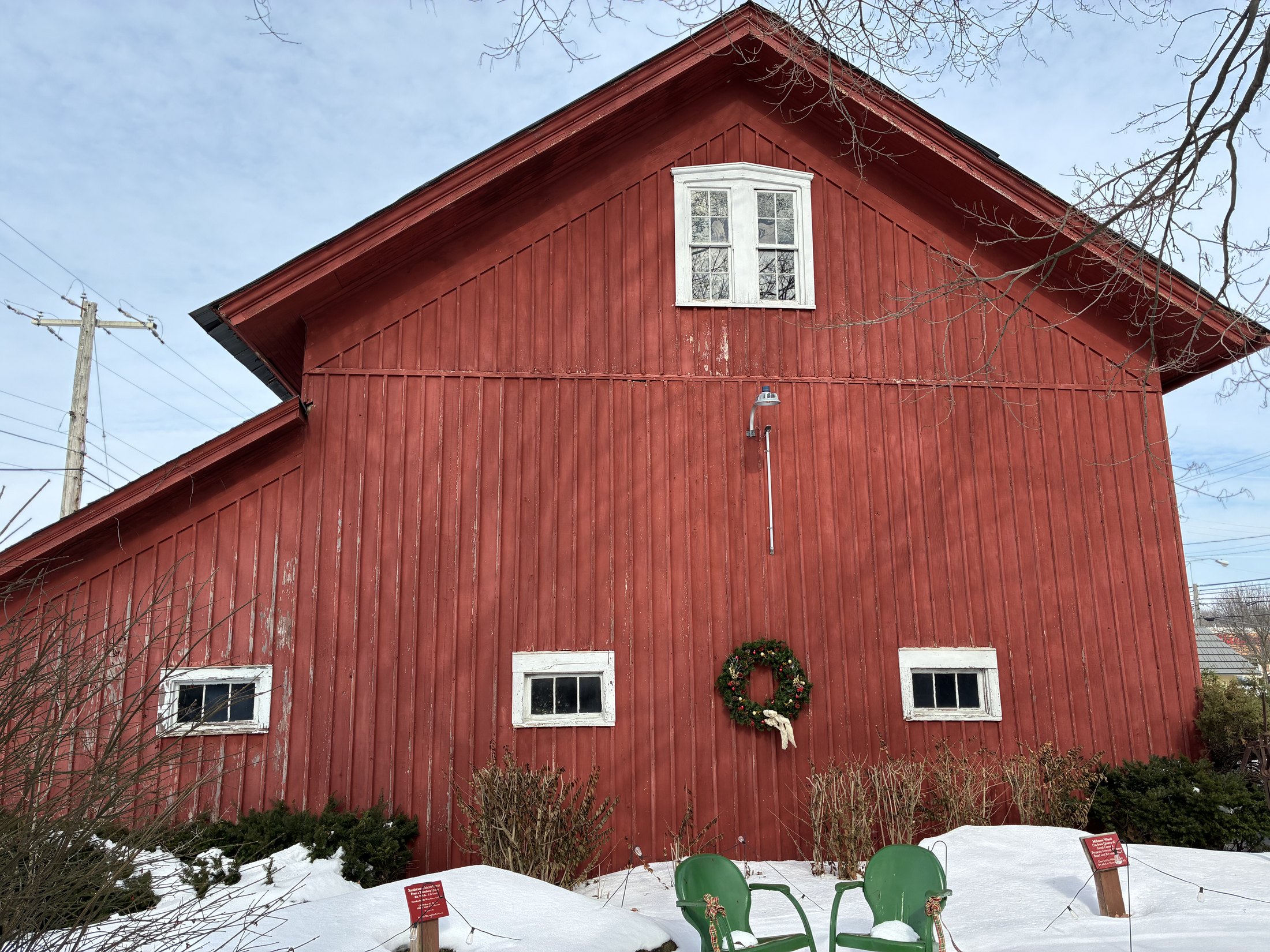
Project photographs are being incorporated into this journal as work progresses so existing conditions, repairs and preservation decisions remain part of the permanent project record.
Current restoration scope
The current work includes controlled washing and surface preparation, PeelRx and PrimeRx restoration coatings, window glazing, replacement of suspect roof screws with EPDM-sealed fasteners, drip-edge work beneath the cap, minor carpentry repairs and lift-assisted access. The metal roof is also planned for two coats of Henry's fibered silver roof coating.
Lower-skirt details are being evaluated according to field conditions, including methods to protect the lower wall assembly from recurring moisture while preserving the barn's appearance.
Field journal
Preserving the marks people left behind
One small historic signature or marking on the barn had specifically been identified by the Historical Society for preservation. During the initial washing phase, the marking was inadvertently struck by the pressure washer and was substantially diminished.
The remaining evidence and available project photographs will be treated as reference material. Rather than treating the area as an ordinary repaint, the goal is to preserve what remains and, where appropriate, carefully reconstruct the legibility of the historic marking without disguising the fact that the underlying surface is old.
The incident illustrates why documentation matters on historic structures. A name, outline, brush mark or faded advertisement that might appear insignificant during ordinary surface preparation can be part of the building's historical record. Once removed, that evidence may be impossible to recover without photographs or other documentation.
Historic lettering and painted advertising
The barn's surviving painted lettering is being approached separately from the surrounding field of siding. Where outlines remain, the preservation plan is to stabilize them before repainting rather than erase the original reference. Clear PrimeRx can be used selectively where appropriate to preserve surviving outlines while the lettering is carefully re-established by hand.
Historic restoration requires restraint. The objective is not to make an old barn look newly manufactured. It is to stabilize what is failing, manage the causes of deterioration and preserve the visual evidence that gives the building its identity.
Repair before finish
Coatings cannot compensate for open joints, failed glazing, deteriorated wood, loose fasteners or active water entry. Each area is being treated according to its actual condition before the finish system is applied.
Why this is a running record
The Freeman Barn work is being documented as an active restoration journal rather than presented only as a finished-project gallery. Washing, drainage observations, historic markings, glazing, carpentry, roof work, PeelRx and PrimeRx application, lift work and progress photographs will be added as the restoration advances.