Industrial Coatings • Technical Field Record
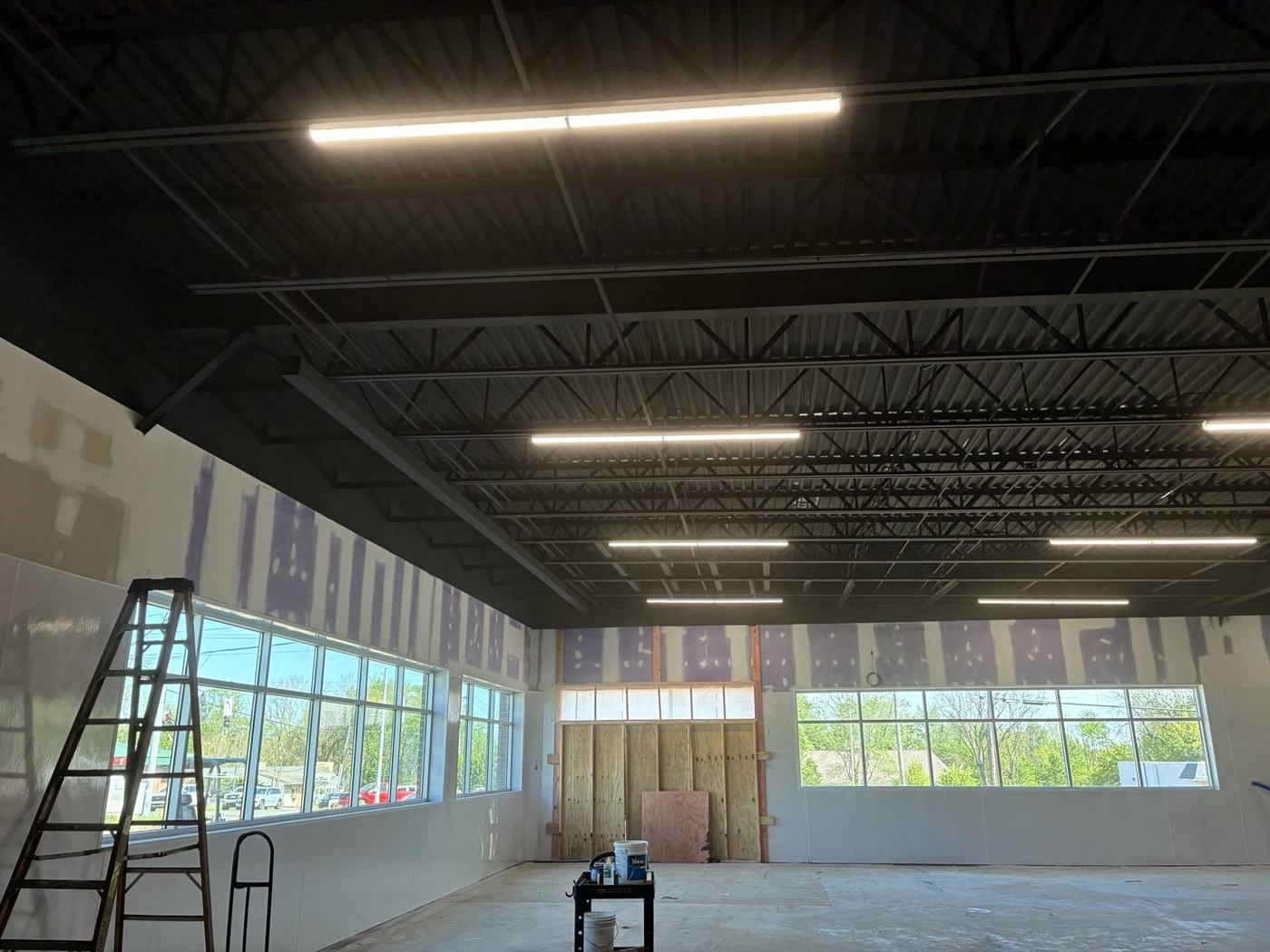
Flat Black Open-Deck Ceiling Systems
A successful black ceiling is not simply a matter of pointing an airless sprayer upward. Lighting, coverage, access, dryfall behavior, protection and production sequence all determine whether the finished deck looks uniform.
Field background
Exposed commercial ceilings combine steel deck, joists, conduit, ductwork, sprinkler piping and suspended components into one visual plane. Flat black can unify that structure, but it also exposes thin coverage, missed angles and uneven sheen under modern LED lighting.
The challenge
The applicator must coat a three-dimensional assembly while controlling overspray below it. Spraying from only one direction leaves shadows behind joists, piping and deck ribs. Moving too slowly creates excess material; moving too quickly leaves a ceiling that appears gray or patchy.
Preparation and sequencing
Work begins with a realistic assessment of what must be protected, what can remain in place and how lifts or scaffolding will move through the space. Dust, loose material and incompatible existing coatings must be addressed before production begins.
- Protect finished surfaces, equipment and occupied areas below.
- Confirm coating compatibility and manufacturer requirements.
- Plan cross-direction spray passes to reach hidden faces.
- Coordinate access so completed work is not repeatedly disturbed.
Application judgment
Consistent results come from maintaining distance, fan overlap and pace while changing direction enough to reach structural shadows. The crew must continuously distinguish between a true coverage problem and a temporary wet-film appearance.
Result and lesson
The goal is a visually continuous overhead plane—not merely black paint on individual components. That requires preparation, lighting awareness and a production plan matched to the building.